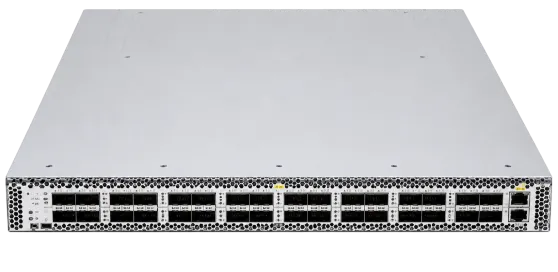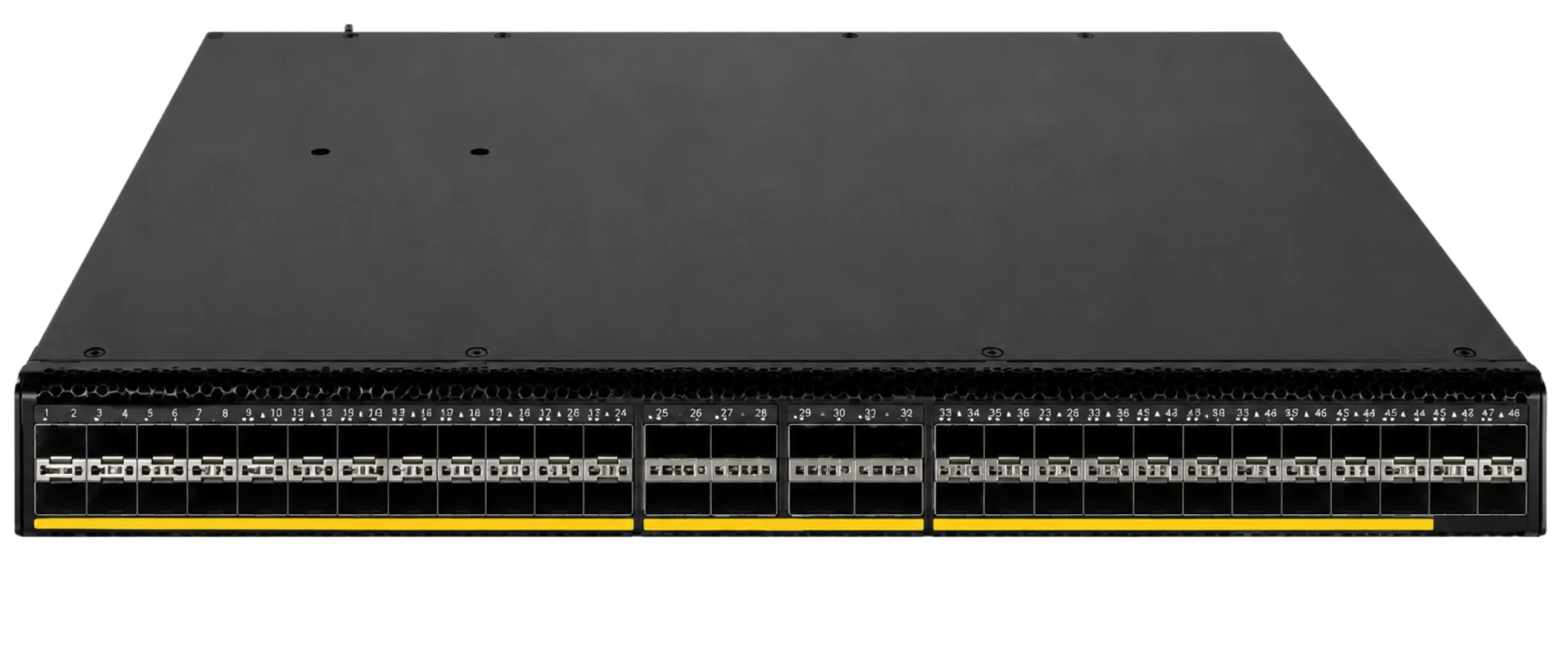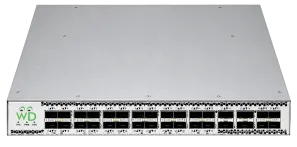
WD 9865 Data Center

WD9865 SERIES DATA CENTER SWITCHES

The WD9865 DataCenter Switches series represents the latest generation of enterprise-grade Ethernet switches, engineered specifically for modern data center environments. Built with exceptional performance and port density in mind, these switches deliver 400GE, 200GE, and 100GE connectivity options with redundant power and cooling systems for maximum reliability.
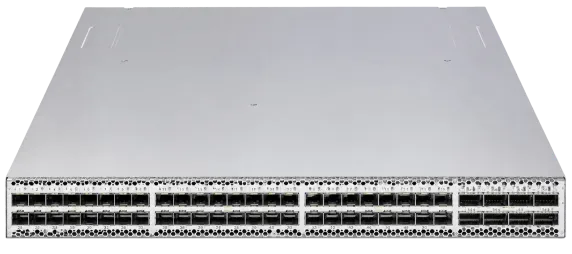
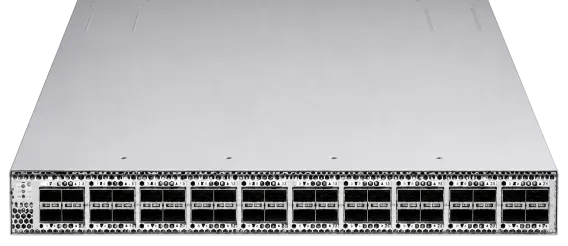
WD9850-64H front panel

WD9865-24TH8QDF

  • 24 x200G QSFP56 ports + 8 x400G QSFP-DD ports.
WD9850-64H front panel

WD9865-48DH8QDF

  • 48x 100G DSFP ports + 8 x400G QSFP-DD ports
WD9850-64H front panel

WD9865-40TH

  • 40x 200G QSFP56 ports
WD9850-64H front panel

WD9865-32QDF

  • 32x 400G QSFP-DD ports

Key Features

Superior Port Density with Exceptional Forwarding Performance

The WatchDog WD9865 delivers industry-leading port density with support for 400G, 200G, and 100G interfaces. With a peak forwarding capacity of up to 16 Tbps, the switch enables data centers to implement high-density server connectivity strategies while maintaining full non-blocking fabric performance across all port speeds and configurations.

Comprehensive Data Center Networking Capabilities

Modern data center deployments demand sophisticated networking features. This WD9865 Series portfolio includes: Advanced Overlay Networking: Full support for MP-BGP EVPN and VxLAN VTEP technologies, enabling flexible network virtualization and multi-tenant architectures. Low-Latency RDMA Support: Built-in ROCEv2 networking capabilities leveraging Priority-based Flow Control (PFC) and ECN Enhanced Transmission Selection (ETS) to guarantee minimal latency and lossless packet delivery for RDMA applications and high-performance computing workloads.

Programmable SDN Architecture

The WatchDog WD9865 integrates next-generation switching silicon that provides substantially greater flexibility for software-defined networking implementations. Enhanced OpenFlow table architecture, expanded ACL resources, and precision packet classification capabilities deliver dramatically improved SDN functionality compared to legacy platforms. This programmability fully addresses the requirements of enterprise SDN networks and controller-based fabric architectures.

Software

SOFTWARE SPECIFICATIONS

VxLAN
  • BGP-EVPN
  • VxLAN (Network Virtualization)
  • M-LAG
  • S-MLAG (Device Virtualization)
  • L2 VxLAN Gateway
  • Port-based VLANs
  • WD DC Controller
  • Q-in-Q
  • Manual Configured VxLAN
  • IPv4 VxLAN Tunnel
  • IPv6 VxLAN Tunnel
  • QinQ VxLAN Access
  • Distributed VxLAN Gateway
  • Centralized VxLAN Gateway
  • EVPN VxLAN
  • L3 VxLAN Gateway
Layer 2 Technologies
  • Dynamic Learning and Aging
  • Dynamic, Static, and Blackhole Entries
  • Loopback Detection
  • Port-Based VLANs
  • Protocol VLAN
  • MAC-Based VLAN
  • MVRP (Multiple VLAN Registration Protocol)
  • MAC Address Limiting on Ports
  • Q-in-Q
  • Subnet-Based VLAN
  • PVST / PVST+ / RPVST+, STP / RSTP / MSTP
  • Super VLAN
  • VLAN Mapping
  • PVLAN
IPv4 Routing
  • BGP (Border Gateway Protocol)
  • IS-IS (Intermediate System to Intermediate System)
  • PBR
  • OSPF (Open Shortest Path First)v1/v2
  • RIP v1/v2
  • Routing policy
  • Static routing and default routing
IPv6-Based Routing
  • BGP4+
  • IPv6 ISIS
  • MLD Snooping
  • PBR
  • OSPFv3
  • RIPng
  • Routing Policy
  • Static Routing and Default Routing
  • VRRP
IP Services
  • DHCP Relay
  • DHCP Server
  • DHCP Snooping
  • DHCP server of 3K operations/second
  • Support L2 VPN
  • Support L3 MPLS VPN
  • Support MCE
  • MPLS OAM
  • VPLS
  • P/PE function
Multicast
  • Any-RP
  • IGMP / MLD
  • IGMP snooping
  • MLD snooping
  • IPv4 / IPv6 PIM snooping
  • MSDP
  • PIM / PIM-SM / SSM
  • Multicast VPN
  • IPv4 / IPv6 multicast VLAN
Quality of Service (QoS)
  • Accounting by packet and byte
  • CAR (Committed access rate)
  • COPP
  • Flexible queue scheduling
  • SP, SP+WFQ
  • SP+WDRR (Weighted Deficit Round Robin)
  • Packet filtering at L2 (Layer 2) through L4 (Layer 4); flow classification based on source MAC address, destination MAC address, source IP (IPv4/IPv6) address, destination IP (IPv4/IPv6) address, port, protocol, and VLAN to apply qos policy, including mirroring, redirection, priority remark etc.
  • Packet filtering L2–L4
  • STP Root Guard, BPDU Guard
  • Storm control (Broadcast, Multicast, Unknown-unicast)
  • WFQ (Weighted Fair Queuing), WDRR
High Availability & Resiliency
  • BFD for BGP/BGP4, IS-IS/S-ISv6, OSPF/OSPFv3
  • PIM/IPM for IPv6 & static routes
  • CLOS+ midplane-free design
  • DLDP
  • LDP
  • ERPS (ITU-T G.8032)
  • Ethernet OAM
  • Hot swapping for all components
  • IP-FRR and TE-FRR (<50 ms)
  • LACP
  • LACP local forwarding first
  • LACP short-time
  • LACP stack split detection
  • N+1 redundancy for switching fabric modules
  • NSR/GR for BGP/IS-IS/OSPF/RSVP
  • Passive backplane
  • Port aggregation
  • Multi-card aggregation
  • Real-time backup on active/standby MPUs
  • RRPP, SmartLink
Security
  • ARP attack protection
  • Boot ROM access control
  • Support DDos, ARP attack and ICMP attack function
  • HTTPS / PKI, SSL / SSH 2.0
  • IP-MAC-port binding and IP Source Guard
  • RMON & RADIUS
  • Password protection & ICMP attack protection
  • Hierarchical management and password protection of users
  • Authentication methods, including AAA, RADIUS and TACACS+
Traffic Analysis & Telemetry
  • gRPC
  • ERSPAN
  • Mirror on Drop
  • Telemetry Stream
  • INT (Inband Telemetry)
  • Packet trace
  • Packet capture
Configuration & Maintenance
  • AAA
  • BootRom update and remote update
  • Console / Telnet / SSH
  • File upload/download via FTP/TFTP
  • GIR Graceful Insertion & Removal
  • PTP
  • NQA
  • Ping
  • Traceroute
  • SNMP v1/v2/v3
  • System log
  • NTP
  • User hierarchical management
  • ZTP
Lossless Network Features
  • PFC (Priority Flow Control)
  • ECN (Explicit Congestion Notification)
  • DCBX (Data Center Bridging Exchange)
  • RDMA (Remote Direct Memory Access)
  • RoCE (RDMA over Converged Ethernet)
  • PFC Deadlock Watchdog
  • ECN Overlay
  • RoCE Stream Analysis
Programmability & Automation
  • Ansible
  • Netconf
  • OpenFlow 1.3
  • TCL
  • Restful API
  • Netstream
  • Sflow
  • Python/TCL/Restful API for DevOps automation
Hardware

Hardware Specifications

Item WD9865-48DH8QDF WD9865-24TH8QDF WD9865-40TH WD9865-32QDF
CPU 2.9GHz@4core 2.9GHz@4core 2.9GHz@4core 2.9GHz@4core
SDRAM 16G 16G 16G 16G
Flash 240G 240G 240G 240G
Latency <1.2µs <1.2µs <1.2µs <1.2µs
Serial Console Port 1 × RJ-45 1 × RJ-45 1 × RJ-45 1 × RJ-45
Switching Capacity 16Tbps 16Tbps 16Tbps 25.6Tbps
Forwarding Capacity 2680Mpps 2680Mpps 2680Mpps 5346.7Mpps
Buffer (Byte) 82M 82M 82M 132M
Out-of-band mgmt port 1 × 10/100/1000BASE-T
USB Port 1 1 1 1
SFP+ Port - - - 2
200G QSFP56 Port - 24 40 -
DSFP Port 48 - - -
QSFP-DD Port 8 8 - 32
Power Module Slot 2 2 2 2
Fan Tray Slot 6 6 6 6
Air Flow Direction From front to rear From front to rear From rear to front From front to rear
Dimensions (H × W × D) 44 × 440 × 660 mm (1.73 × 17.32 × 25.98 in) 44 × 440 × 660 mm
(1.73 × 17.32 × 25.98 in)
44 × 440 × 550 mm
(1.73 × 17.32 × 21.65 in)
44 × 440 × 660 mm
(1.73 × 17.32 × 25.98 in)
Weight (Full Loaded) ≤ 12.2 kg (26.90 lb) ≤ 12.2 kg (26.90 lb) ≤ 12.2 kg (26.90 lb) ≤ 15 kg (33.07 lb)
Minimum Power Consumption Single AC: 125W
Dual AC: 140W
Single AC: 133W
Dual AC: 146W
Single AC: 131W
Dual AC: 146W
Dual DC: 234W
Typical Power Consumption Single AC: 238W
Dual AC: 250W
Single AC: 251W
Dual AC: 263W
Single AC: 258W
Dual AC: 263W
Dual DC: 476W
Maximum Power Consumption Single AC: 713W
Dual AC: 719W
Single AC: 739W
Dual AC: 748W
Single AC: 709W
Dual AC: 748W
Dual DC: 1265W
Operating Temperature -5°C to 55°C -5°C to 55°C -5°C to 55°C -5°C to 55°C
Operating Humidity 5% to 95%, noncondensing 5% to 95%, noncondensing 5% to 95%, noncondensing 5% to 95%, noncondensing
MTBF (Year) 49.3 49.3 49.3 49.3
MTTR (Hour) <0.5 <0.5 <0.5 <0.5